What is Collaborative Risk Management?
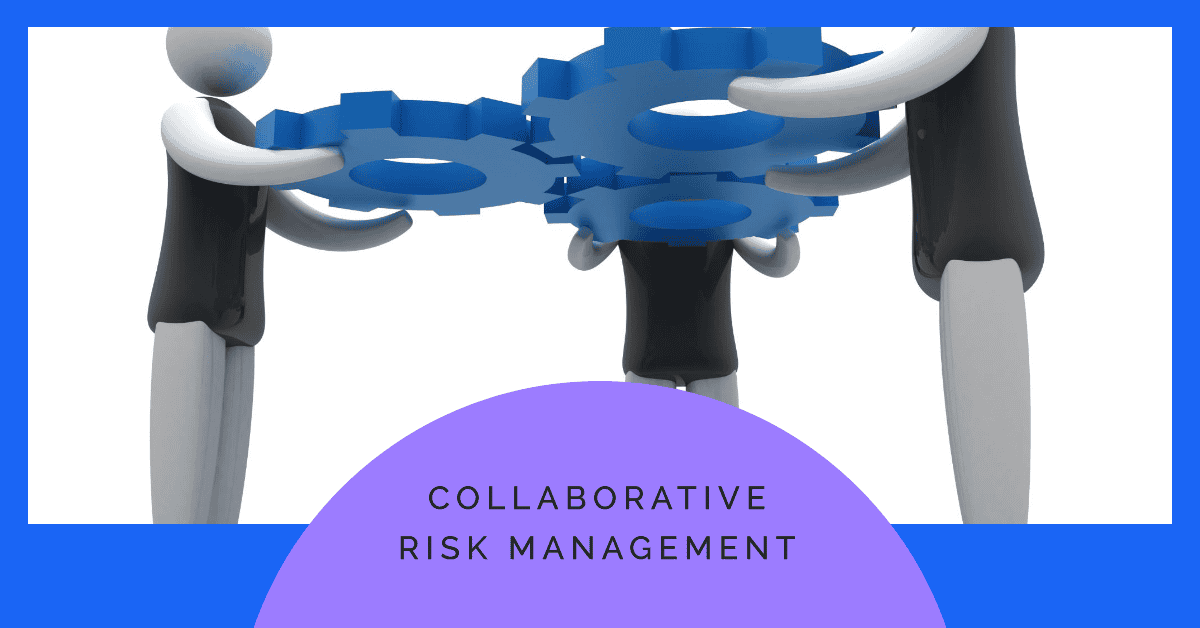
Collaborative risk management is a strategic framework where two or more independent organisations jointly identify, assess, and mitigate shared market or supply-chain threats to build collective business resilience.
No organisation operates in isolation. Failures and crises in one company can quickly cascade through entire industries and supply chains. Risk organisation is evolving as the size and complexity of contemporary business activities accelerate.
One approach that has gained significant traction in recent years is collaborative risk management, which involves working with other organisations to identify, assess, control, and mitigate risks.
Key Takeaways
- Shared Resilience: Collaborative risk management allows businesses to pool resources, making it easier to identify and mitigate cross-industry vulnerabilities
- Trust & Transparency: The foundation of a successful risk-sharing partnership requires clear data-sharing protocols and aligned corporate risk cultures
- Proactive Strategies: Effective frameworks rely on joint risk registers and formalised communication channels rather than reactive problem-solving
- Mutual Accountability: Clear boundary lines and defined responsibilities prevent operational friction and ensure compliance across both organisations
Why Should Businesses Partner Together for Risk Management?
Working across risk silos can support an organisation in managing uncertainty in a wide range of ways:
- Greater detail: because they have access to the experiences and information collected from their whole sector, they might be able to see the significant effects of likely risks in more detail
- Shared resources: coordination with other organisations allows for shared investment in risk management efforts, thereby increasing feasibility and effectiveness
- Stronger resilience: working together enables organisations to develop more robust and effective risk management strategies and contingency plans
- Decision-making: having the ability to tap into a diverse range of opinions and data can yield better-informed decisions on risk management
- Increased creativity: collaboration can encourage innovative approaches to complicated and potential risks that wouldn’t have been developed in isolation
What Are the Main Areas of Joint Risk Mitigation?
While all aspects of risk management lend themselves to collaboration, some are particularly suited to partnership:
- Cybersecurity: as cyber risks become more complex and sophisticated, companies in all industries are starting to realise the benefits of sharing intelligence regarding threats and best practices for protection
- Supply chain resilience: global events over the last year have highlighted vulnerabilities across many supply chains. Coalitions between suppliers, manufacturers and distributors can find where the risks lie and take steps to toughen up the weak spots
- Extreme weather events and changing climate patterns impose real risks to virtually every type of business. Collective efforts can help organisations identify, assess, control and mitigate these risks while also advancing broader sustainability objectives
- Regulatory compliance: as regulations increase, adapting to changes becomes increasingly challenging. Yet when companies collaborate across industries, they can collectively stay on top of rule changes and create more cost-effective compliance pathways
- Emerging technologies: the rapid exponential development of new technologies offers opportunities for businesses but also leads to the proliferation of uncertainty about them; collaborative efforts could help firms benefit from new technologies more confidently

How Do You Build a Collaborative Risk Management Framework?
If you want your organisation to derive the maximum benefit from this collaborative approach to managing risks, here’s what you should do:
- Look for the sweet spot between your immediate environment and the broader interconnected system
- Take note of network partners who play the role of early warning indicators as others change their actions to reflect new risks and opportunities
- Examine your supply chain to identify your link with critical actors who can influence its resilience. For example, where does your company stand in its relationship with a significant global retail chain?
- Set clear objectives: decide what you’re trying to accomplish through collaboration and make sure all partners are on the same page
- “Marry well”: find partners with whom you share a risk culture, strengths and weaknesses and who are committed to open communication and reciprocity
- Build a formal structure: provide clear procedures and protocols for obtaining information, making decisions and managing risk
- Harness technology: use collaboration tools and technology to enable the partners to communicate and share data in real time
- Promote an ethos of trust: cultivate relationships driven by candour, reciprocity and shared values to promote open discussion and knowledge-sharing
- Test and tweak: frequently assess how well you’re working together and tweak your process
What Are the Biggest Challenges in Shared Risk Management?
The advantages of shared risk management are apparent, but it requires more than simply proposing such initiatives:
- Competitive concerns: an organisation might want to protect sensitive information from its ‘rivals’. The partnership should specify what information will be exchanged, and how and for what purposes
- Legal and regulatory issues: working relationships must conform to antitrust law and other regulations. Legal counsel should be consulted early on
- Cultural differences: understanding each other in the context of organisational, and sometimes national, differences around business culture and practice demands investment in cross-cultural training and communication
- Resource allocation: the partnership will take time, money and personnel. Organisations must invest to win
- Cultural change: how to assess success? Tangible evidence of improved collaboration in extreme risk is hard to measure. Watching for early warning signals of collapse and developing clear metrics and a regular assessment of progress is crucial to maintaining sustainability
What is the Future of Cross-Industry Risk Sharing?
As businesses face increasingly complex and interconnected risks, collaborative approaches to risk management will likely become more critical now and in the future. In particular, emerging technologies such as artificial intelligence and blockchain will likely further advance these collaborative efforts, enabling more sophisticated data use and more secure information sharing, respectively.
Further, awareness of systemic risks that threaten large sectors of industry or economies is driving greater risk-pooling. Even in areas left to market forces, governments and regulators are increasingly encouraging, and sometimes requiring, collaboration to manage risks, particularly in critical infrastructure and financial services sectors.
Summary: Key Takeaways for Partnering on Business Risk
Given the historical uniqueness of our era of hyper-uncertainty and accelerating change, collaborative risk management helps businesses improve resilience and competitiveness by leveraging others’ shared repositories of knowledge, capabilities, and assets.
Collaborative risk management initiatives can be challenging, but the investment is worth it. As we advance, organisations that can collaborate in risk will be better prepared to manage risk, exploit opportunities, and gain a competitive edge.
Suppose businesses act collaboratively and take steps to enhance their resilience. In that case, they can help sustain a more connected and resilient economy. We still have a long way to go, but working together might create a world better prepared for the next crisis, whatever nature throws at us.
Frequently Asked Questions
What is the definition of collaborative risk management?
Collaborative risk management is a strategic practice where two or more separate businesses work together to jointly identify, evaluate, and mitigate shared operational, market, or supply chain threats to build mutual resilience.
What are the primary benefits of joint risk management partnerships?
The main advantages include pooled resources, broader risk visibility across supply chains, shared mitigation costs, and the ability to leverage specialised security or compliance expertise from your partner organisation.
What is the biggest challenge when sharing risk with another business?
The most common hurdle is a lack of alignment between different corporate risk cultures and data-sharing comfort levels, which can lead to communication silos, trust issues, and slow decision-making during a crisis.
How do companies handle data security in a collaborative risk agreement?
Organisations protect their data by establishing strict non-disclosure agreements (NDAs), defining precise data-sharing boundaries, and using secure, siloed platforms or third-party clean rooms to monitor joint risks without exposing proprietary data.
Why do collaborative business frameworks fail?
Most frameworks fail because they lack formal accountability, have vague roles in the joint risk register, or fail to establish clear, standardised communication protocols before a disruptive event occurs.