Why Should Managers Dare to Take Risks?
Managers should take calculated risks because risk-taking drives innovation, builds organisational resilience, and creates the conditions for growth that playing it safe never can. Without a willingness to make uncertain decisions, leaders stagnate, and so do the teams and organisations they lead.
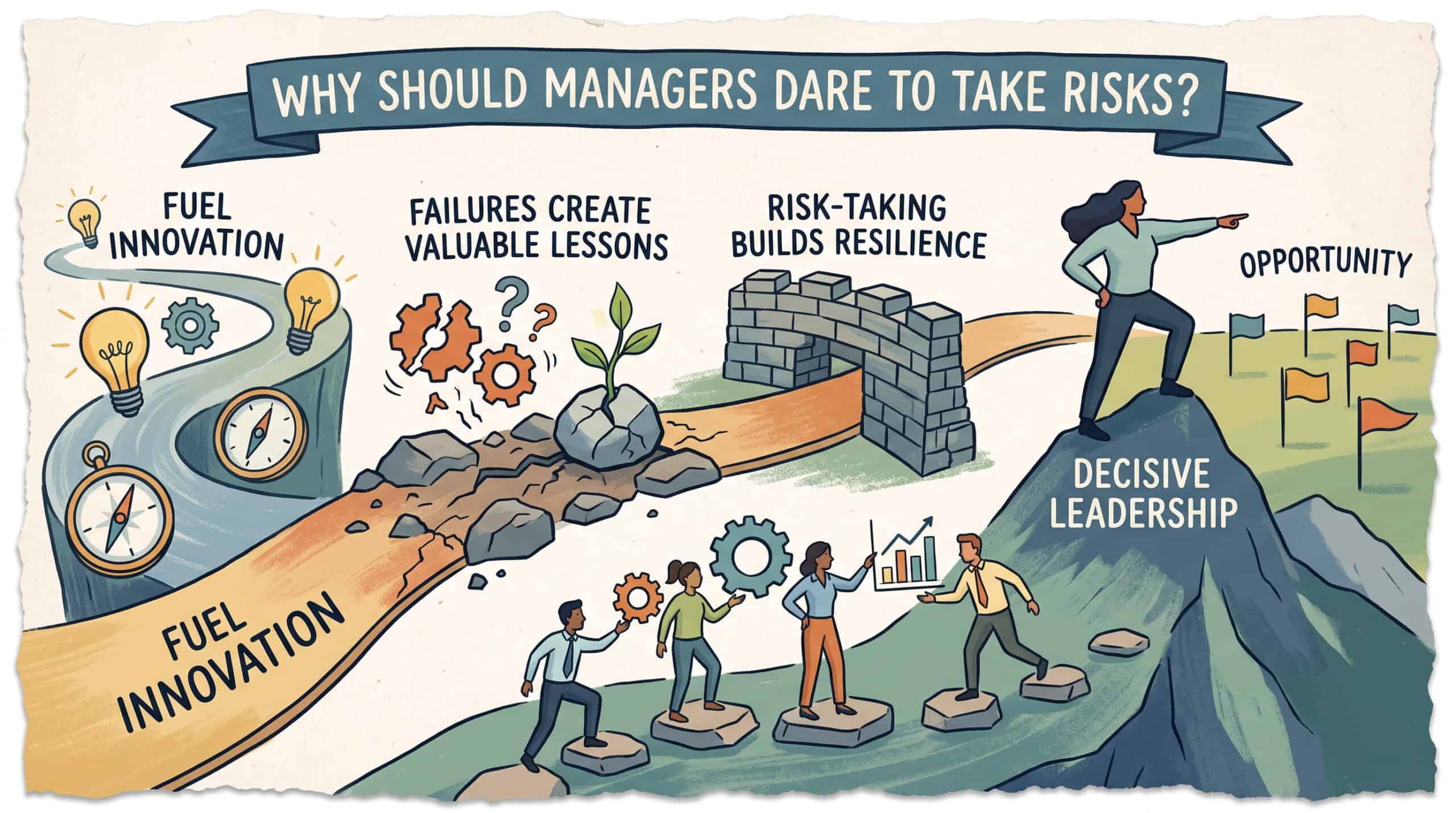
Risk-Taking Fuels Innovation
In a competitive business environment, standing still means falling behind. Fresh ideas and breakthroughs almost always emerge from calculated bets; decisions made without a guaranteed outcome. Managers who avoid risk avoid the very conditions that produce innovation.
Failures Create Valuable Lessons
The most durable leadership lessons rarely come from textbooks; they come from things that went wrong. Every management misadventure, handled well, produces insight that shapes better decisions later. Failure is only wasted when you don’t examine it.
Risk-Taking Builds Resilience
Leaders who never make uncomfortable decisions never develop the capacity to handle adversity. Taking risks and navigating the consequences builds the kind of resilience that makes teams and organisations robust when conditions change unexpectedly.
Decisive Leadership Attracts Opportunity
Teams follow managers who make decisions. A culture of risk-aversion signals a lack of confidence and discourages the kind of bold thinking that attracts talented people, strong partnerships, and new opportunities. Decisiveness is itself a competitive advantage.
If there’s one thing in life that’s certain, taking risks is essential to growth. This holds especially true in a business setting where management and leadership are crucial.
I invite you on a bit of an adventure in the world of management misadventures titled “Dare to Risk It”. Don’t worry; it’s not all gloom and doom. It includes valuable life lessons, fascinating occurrences, and even a sprinkling of humour!
To start with, let’s define what a “management misadventure” is. In simple terms, it’s an unexpected event or situation that arises due to a decision made by a leader or manager. Sometimes, these misadventures become sudden gold mines of innovation and success; at other times, not so much. They prove to be harsh lessons that help to shape better future decisions.
Think about Steve Jobs. He co-founded Apple, got fired from his own company, and started two more companies, NeXT and Pixar, from which he was invited back to Apple as CEO and, as we know, took it to unprecedented heights. Talk about a string of misadventures! But what did they lead to in the end? Amazing triumphs that changed the tech industry as we know it.
Or consider New Coke. In 1985, Coca-Cola changed its hundred-year-old recipe to compete with Pepsi. The result? An overwhelming outcry of public dissatisfaction; management misstepped by not understanding consumers’ deep connection to the brand and its original recipe. But Coke didn’t give up; they admitted their mistake, returned to their old formula, and the incident became part of the brand’s rich history.
So why should management dare to take risks?

First, risk-taking promotes innovation. In today’s business climate, standing still means falling behind. Companies need fresh, innovative ideas to thrive, and these ideas often emerge from calculated risks.
Second, failures lead to valuable lessons. Indeed, the road to success isn’t always smooth. But those bumps and potholes along the way are what make us stronger and wiser. Often, the best advice and lessons come from misadventures and not textbooks.
Dare to take risks because it builds resilience. Failures and mistakes test your mettle, especially when you’re in a leadership position. If you’re not making mistakes, you’re not making decisions.
But hold up, taking risks doesn’t mean throwing caution to the wind. It’s all about taking calculated risks. It involves weighing the pros and cons, understanding the potential likelihood and consequences, and preparing for any outcome.
Can you imagine if Thomas Edison had feared risks and misadventures? We’d be sitting in the dark right now. Remember, he famously said, “I have not failed. I’ve just found 10,000 ways that won’t work.”
Adventures in management: misadventures are inevitable. The key is to embrace them, learn from them, and, most importantly, let them inspire you to do better. Whether you’re a seasoned CEO or a budding entrepreneur, taking risks is essential to your journey.
Final Thoughts
On your business adventure, you’ll face obstacles and missteps. You might even lose your way at times. Remember, these management misadventures will shape and mould you into an effective and resilient leader.
We’re not encouraging reckless abandon; instead, we’re inviting you to welcome possibilities, embrace uncertainties, take calculated risks, and remember that every mishap is a stepping stone to success.
So go ahead, dare to take risks, and never stop finding exciting paths to success!
Frequently Asked Questions
What Is the Difference Between Reckless Risk and Calculated Risk?
A reckless risk is taken without weighing the likelihood or consequences of failure. A calculated risk involves deliberately assessing the potential downsides, preparing for different outcomes, and deciding whether the potential upside justifies the uncertainty. Good managers take calculated risks, not gambles.
What Is a Management Misadventure?
A management misadventure is an unexpected outcome that results from a decision made by a leader or manager. It may lead to failure, but it can equally become the catalyst for innovation or a pivotal lesson that shapes a better future direction for the organisation.
Can Risk-Taking Be Taught to Managers?
Yes. Risk tolerance is partly temperamental, but structured risk management processes, psychological safety within teams, and deliberate reflection on past decisions can all increase a manager’s willingness and ability to make confident, well-reasoned bets.